REVIEW · SEVEN MILE BEACH
Introductory Semi-Private Kitesurf Lesson
Book on Viator →Operated by Kitesurf Cayman · Bookable on Viator
Kiteboarding starts with one calm, guided session. On Seven Mile Beach, this semiprivate introductory kitesurf lesson is built for real beginners: you get step-by-step kite handling, then move toward your first water starts once your control is solid. I like the hotel pickup/drop-off plus all the equipment, because it removes the usual hassle of planning a watersport day. I also like that semiprivate means you’re not swallowed by a big group. One thing to consider: because you share the session with one other rider, you trade a bit of total 1-on-1 time for the lower $400 per group price.
You’ll spend about 2 hours out on the sand and water, learning how to fly, handle, and control the kite before you start working the board. Booking can fill up since this is commonly reserved around 30 days in advance, so plan ahead if your dates are fixed.
In This Review
- Quick Hits: what makes this lesson work
- Seven Mile Beach: why Cayman works for first-time kiting
- Semiprivate attention: what you’re really paying for at $400
- The 2-hour flow: kite control to first board runs
- 1) Meet-up, pickup, and gear setup
- 2) Kite handling on the beach and nearshore
- 3) Transition to water starts and board runs
- Instructors and the “tiny safety habits” that matter
- Equipment, water depth, and why learning feels easier here
- Value check: is $400 a good deal?
- Who this suits best (and who should plan differently)
- Weather and timing: planning around wind is part of the game
- Booking notes that actually help on the ground
- Should you book this intro semi-private lesson?
- FAQ
- How long is the introductory semiprivate kitesurf lesson?
- Is the lesson only for beginners?
- What is the group size for a semiprivate lesson?
- What’s included in the price?
- Do I need good weather for this experience?
- What’s the cancellation policy?
Quick Hits: what makes this lesson work
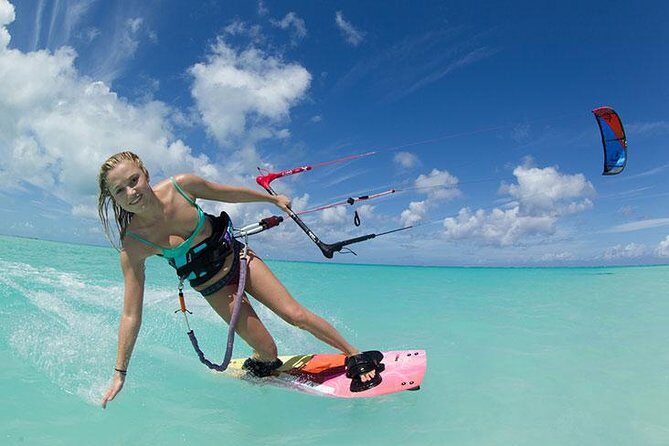
- Semiprivate attention with only one other person, so your instructor can correct your kite control fast
- All equipment included, which matters because kitesurfing gear fit and setup is a big part of staying safe
- Hotel pickup and drop-off at selected hotels, plus a mobile ticket so you’re not scrambling that morning
- Seven Mile Beach conditions that support learning, including shallow wading water and clear visibility
- Instruction that scales from kite skills to first water starts and board runs
Seven Mile Beach: why Cayman works for first-time kiting
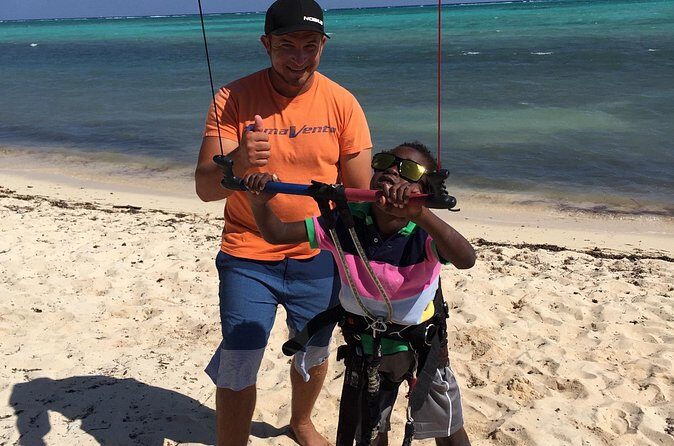
The Cayman Islands are famous for consistent wind, but for learning, what matters even more than the wind is the water “learning zone.” Seven Mile Beach is the kind of place where instructors can stage lessons so you spend more time practicing and less time chasing conditions.
In this lesson setup, you’re not thrown straight onto a crowded launch line. The goal is a clean progression: first you learn the kite basics and control, then you get your board work once your kite handling is reliable. That sequence is what turns a scary idea into an achievable plan.
You’ll also notice how much the team leans into comfort and safety. Multiple instructors are described as patient and practical, and that fits the reality of kitesurfing: you’re doing new movements near powerful wind, so a calm coaching style helps.
You can also read our reviews of more tours and experiences in Seven Mile Beach.
Semiprivate attention: what you’re really paying for at $400
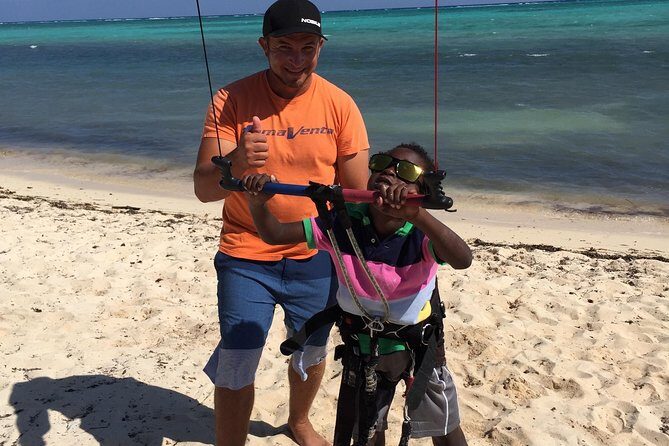
This is $400 per group (up to 2 people), not per person. So you’re buying a small coaching bubble, gear time, and a structured progression in a place that suits beginner practice.
If you’re traveling with a partner, teen, or friend who’s also learning, semiprivate is one of the best value formats. Instead of paying for a full private lesson, you split the group cost while still getting plenty of instructor attention. That’s a big deal because the earliest wins in kitesurfing are often tiny: body position, kite angle, and timing with the board.
There’s a trade-off, though. Since you share the session, your instructor will balance time between two riders. You still get hands-on guidance, but it may not feel as “laser-focused on only you” as a true private lesson.
The 2-hour flow: kite control to first board runs
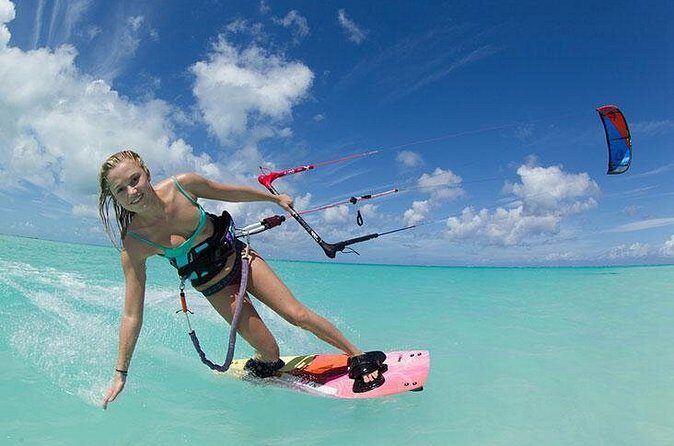
You should expect the lesson to move in phases. The rough rhythm is: kite work first, then board work once you can control the kite well enough to start water starts.
1) Meet-up, pickup, and gear setup
If you’re picked up from a selected hotel, you’ll start the day with less logistics. When you arrive, you’ll get oriented and your gear will be set up with you in mind. Good gear setup isn’t just a comfort thing; it’s part of safety and it helps you learn faster.
The operation is described as professional and organized, with instructors getting rigs and launching handled smoothly. That means less time fiddling and more time practicing the actual skills.
2) Kite handling on the beach and nearshore
Before anyone gets dragged by a kite that’s working against you, you start with control basics. You’ll learn how to handle and fly the kite, and how to keep it in the range where you can make progress instead of panic corrections.
This is where patient instruction really shows. Instructors such as Pedro are described as thorough and very patient. That kind of teaching style matters because kite control is not “one trick”—it’s a chain of small corrections that add up.
3) Transition to water starts and board runs
Once your kite control is good, you shift to using the board. The lesson is designed so that you begin with first water starts and then board runs.
A useful way to think about this: the kite is your power system. The board is your steering and balance test. When you can manage both, your session stops being just lessons and starts being real riding.
People leave with different results depending on experience and conditions. One rider described going from face planting to riding upwind and downwind after a few lessons, and that’s consistent with how the progression tends to work when kite control clicks.
Instructors and the “tiny safety habits” that matter
Kitesurfing is physical and technical, but the difference between a rough session and a smooth one often comes from small coaching cues and safety routines.
This school’s instructors come through repeatedly in the details. Pedro is praised for being thorough, knowledgeable, and patient. Louis is noted for being a fantastic teacher who helped a first-timer get standing by the end of the lesson. Will is described as positive and effective over multiple days, and Miguel is highlighted for patience with a learner working toward their goal. Behind the scenes, Natasha is described as responsive and helpful with scheduling and communication.
You’ll also see signals that safety monitoring is built in. One description includes instructors using radios, which is a smart way to coordinate and keep communication clear while you’re out on the water. When you’re learning, clear communication can prevent delays and reduce frustration.
Equipment, water depth, and why learning feels easier here
All necessary equipment is included, which you should treat as a real quality signal. In kitesurfing, the gear you use affects everything: handling, comfort, and how quickly your body learns the movement patterns.
The lesson also benefits from the local learning conditions. Reviews describe calm, clear, shallow water (often mentioned around knee-deep or waist-deep), where instructors can walk out and guide you. That kind of depth helps you practice without the fear factor going through the roof.
It’s also why progression can feel surprisingly fast for beginners. When you can stand, reset, and practice with lower risk, you build confidence faster. One family described being up and kiting on their own after several lessons, and another rider called this one of the best learning locations they’ve experienced.
Even if you’re brand new, you’re not starting from zero with zero confidence. The setup is designed so you can repeat the same skill enough times to improve, instead of getting knocked out of practice by conditions.
Value check: is $400 a good deal?
For many people, the math is simple. You’re paying $400 per group up to 2 for about 2 hours with equipment and pickup/drop-off included.
So the value question becomes: are you getting enough time in the water, plus real instruction, not just a demo?
The lesson format answers that. Semiprivate means you’re not competing for attention in a large class, and it’s also a budget-friendly middle ground between group lessons and private coaching. People also recommend a follow-up if you like it, because the first session often turns into the foundation for faster improvement later.
If you’re traveling solo, you should weigh the trade-off between cost and coaching intensity. Semiprivate can still be a great intro, but if you know you’ll want maximum 1-on-1 time, a private follow-on lesson is something to consider.
Who this suits best (and who should plan differently)
This lesson is set up for most travelers, and the structure makes it especially good for:
- True beginners who want a clear progression and a safe learning zone
- Pairs (friends, couples, parent/teen) who want to learn together and share the cost
- People who want coaching that stays personal, not “watch and wait”
It may be less ideal if you’re expecting a full-on advanced training session. The instruction is focused on introductory kite handling, the first water starts, and board runs. You’ll likely build strong fundamentals, but advanced tricks and high-performance skills aren’t the point of this specific lesson.
Also keep in mind that you’ll want the right mindset for learning in wind. If you’re the type who gets stressed by physical challenges, it helps to show up ready to practice, reset, and take corrections seriously.
Weather and timing: planning around wind is part of the game
Kitesurfing is weather dependent. This experience requires good weather, and if it’s canceled due to poor conditions, you’ll be offered a different date or a full refund.
That matters for your Cayman itinerary. If you’re trying to stack multiple activities, build in flexibility on your kitesurf day. Wind can shift, and even when conditions are close, instructors may still prioritize safety and teach only when the learning setup is right.
Also, plan for scheduling lead time. The lesson is often booked about 30 days in advance on average, so if you’re traveling during peak season or have a tight window, lock in early.
Booking notes that actually help on the ground
A few small logistics details can make your morning smoother:
- Hotel pickup/drop-off is included, but only for selected hotels, so confirm you’re on the list before you count on it.
- You’ll receive a mobile ticket, which keeps check-in simple.
- For cruise ship days, the organizer asks for your ship name and key docking/re-boarding times, so your pick-up doesn’t drift.
Should you book this intro semi-private lesson?
I’d book it if you want a serious introduction without paying for a fully private setup. The combination of semiprivate coaching, included equipment, and a learning-friendly spot at Seven Mile Beach is exactly what helps beginners move from “scary idea” to “standing on the board” faster.
Book it especially if you’re traveling with someone who also wants to learn. Sharing the lesson can turn a high-cost sport into a doable day, while still keeping your instructor close enough to correct your kite control in real time.
I’d hesitate only if you’re on a super rigid schedule with no flexibility for weather, or if you’re expecting an advanced skill session. For fundamentals, safety, and first rides, this is a strong bet—and the fact that people often return for additional lessons is a pretty good sign.
FAQ
How long is the introductory semiprivate kitesurf lesson?
It runs for about 2 hours (approx.).
Is the lesson only for beginners?
It’s described as an introductory lesson, and it says most travelers can participate.
What is the group size for a semiprivate lesson?
It’s semiprivate, with up to 2 people in the group (you share with one other person).
What’s included in the price?
The price includes equipment and hotel pickup and drop-off (selected hotels only).
Do I need good weather for this experience?
Yes. The experience requires good weather, and if it’s canceled due to poor weather you’ll be offered a different date or a full refund.
What’s the cancellation policy?
You can cancel up to 24 hours in advance for a full refund. If you cancel less than 24 hours before the start time, the amount you paid is not refunded.